



Mole Removal
Diagnosing skin lesions can be challenging. Dr. Rodwell has extensive experience performing biopsies and diagnosing benign and cancerous lesions. The good news is that most skin lesions are indeed benign, which means they are not skin cancer. When that is the case, Dr. Rodwell can remove them himself and take care of the cosmetic aspect of the process at the same time – making sure that your skin looks as normal as possible.
When a lesion is found to be skin cancer Dr. Rodwell can remove the cancer himself, but often he will work with a dermatologist with expertise in the Mohs surgery technique for the removal of the cancer.
Sometimes, a simple repair to the area where a cancer was removed can be performed, but in many cases a more complex reconstruction is needed, especially around the sensitive areas of the face, eyelids, and nose. Dr. Rodwell may then need to perform more advanced techniques for Skin Cancer Reconstruction.
Continue reading to learn more about Charleston mole removal procedures, or schedule your consultation at Charleston Facial Plastic Surgery today to reserve your consultation with Dr. Rodwell. We look forward to hearing from you.
What is Mole Removal?
Mole removal is a minor surgical procedure used to remove a mole or other type of skin lesion from the surface of the skin. Depending on the characteristics of the lesion, removal may be recommended for medical, diagnostic, or cosmetic reasons.
Some moles are removed because they show signs of irregularity, such as changes in size, shape, or color. Others may be removed because they are raised, irritated, or located in an area where they are frequently rubbed or injured. In many cases, patients simply wish to remove a mole for aesthetic reasons.
There are several techniques that may be used, including:
- Surgical excision (removing the mole along with a small margin of surrounding tissue)
- Shave removal (removing the raised portion of the lesion at the surface)
- Biopsy with removal (used when diagnosis is needed before determining next steps)
The appropriate technique depends on the type of lesion, its depth, its location, and whether there is any concern about skin cancer.
Why consider Mole Removal with Dr. Rodwell?
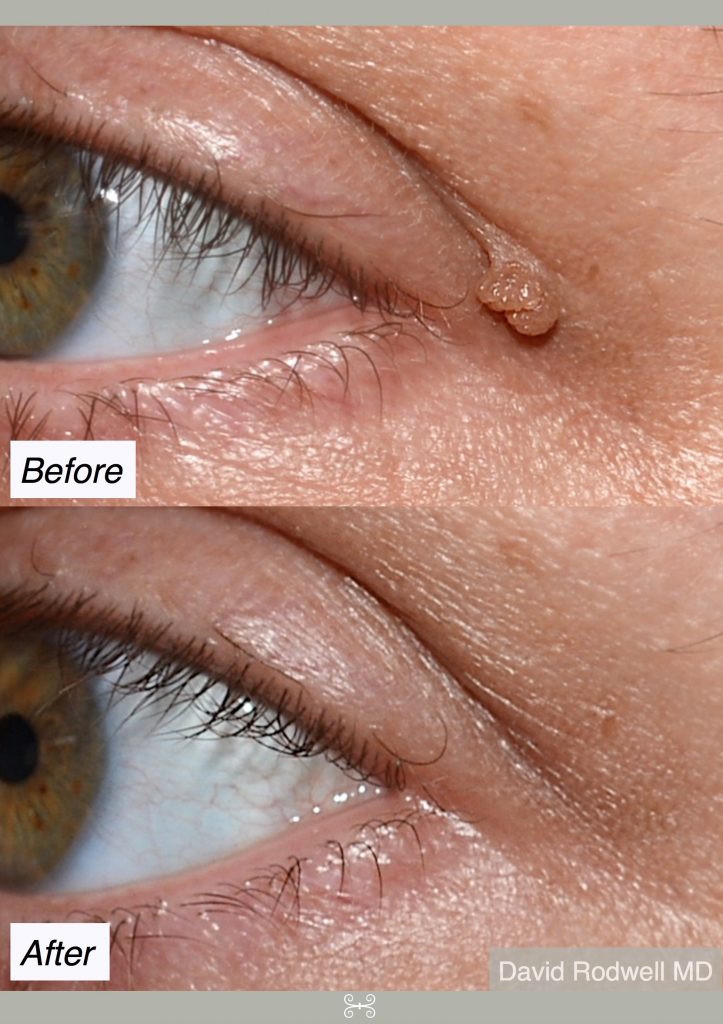
Dr. Rodwell is skilled at diagnosing and removing all types of skin lesions:
- Seborrheic keratoses
- Sebaceous hyperplasia
- Cherry angioma
- Skin tags
- Liver spots
- Moles
- Cysts
- Skin cancer
Dr. Rodwell’s Approach to Mole Removal in South Carolina
Once Dr. Rodwell has diagnosed the skin lesion, which may require a biopsy, he will then educate you on the best technique options for removal. He will then devise a surgical plan that is appropriate for the type of lesion you have.
His approach is guided by several key principles:
- Accurate Diagnosis First
Before any removal, the priority is determining exactly what the lesion is. This ensures appropriate treatment and eliminates unnecessary procedures.
- Conservative, Precise Technique
Only the necessary tissue is removed, minimizing disruption to the surrounding skin.
- Cosmetic Awareness
Particularly for lesions on the face or other visible areas, incision placement and closure techniques are carefully planned to reduce visible scarring.
- Patient Education
You will understand what to expect before, during, and after the procedure, including healing timelines and scar care.
When skin cancer is diagnosed, Dr. Rodwell may collaborate with dermatologists who specialize in Mohs surgery to ensure complete removal. He frequently performs reconstruction afterward, especially in delicate areas such as the eyelids, nose, and lips.
He will let you know what to expect and whether you need to take off any time from work. Usually, biopsy and removal of these types of skin lesions can easily be performed in the office, and no significant downtime is required after skin lesion removal.
What to Expect After Mole Removal in SC
Every case is different, but most people can continue with their normal activities immediately after the removal of one or more skin lesions. Dr. Rodwell will provide you with complete post-operative instructions for healing, and he will monitor your progress during follow-up visits.
In some cases, you may experience slight bruising, tenderness, and swelling in the treated area. These symptoms should resolve quickly. Most people do not feel the need to take pain medication after this surgery, but you can do so, if necessary. Cold packs may be helpful in some cases as well.
Schedule a Mole Removal Consultation in Charleston
If you have a mole or skin lesion that you would like evaluated or removed, Dr. Rodwell offers expert care in a comfortable, professional setting. Whether your goal is medical clarity or cosmetic improvement, you will receive a thoughtful, personalized approach at every step.
Contact the office today to schedule your consultation and take the next step toward healthier, clearer skin.
Mole Removal FAQs
How do I know if my mole should be removed?
It’s completely reasonable to want clarity about a mole, even if it seems minor. If you notice changes in size, shape, color, or texture, or if the mole becomes itchy, tender, or starts to bleed, it’s important to have it evaluated. Even when a mole appears stable, many patients choose removal for comfort or cosmetic reasons. A consultation with Dr. Rodwell provides a clear answer and a thoughtful plan, so you can move forward with confidence.
Does mole removal hurt?
Mole removal is typically very well tolerated. The area is carefully numbed with local anesthesia before the procedure begins, so most patients feel only slight pressure rather than pain. Afterward, the area may feel mildly sore or sensitive for a short period, but this is usually minimal and resolves quickly without the need for significant downtime.
Will I have a scar after mole removal?
Any time the skin is treated surgically, some degree of scarring is possible. However, Dr. Rodwell approaches every removal with cosmetic precision, especially in visible areas like the face. Incisions are carefully placed and closed to support optimal healing, and most scars fade significantly over time. Patients are also guided on proper aftercare to help the skin heal as smoothly as possible.
How long does it take to heal after mole removal?
Most patients find that the initial healing process takes about 1 to 2 weeks, depending on the size and depth of the lesion. During this time, the area may form a small scab or appear slightly pink. As healing continues, the skin gradually improves in tone and texture over several weeks. You can usually return to normal activities right away, with only minor adjustments for care of the area.
Can a mole grow back after it’s removed?
When a mole is fully removed through excision, it typically does not return. In some cases, particularly with superficial removal techniques, a small portion of the mole may remain beneath the skin, and regrowth is possible. If that occurs, it can be easily addressed. Dr. Rodwell will recommend the most appropriate technique based on your goals and the characteristics of the lesion.
Is mole removal safe?
Yes, mole removal is a very safe and commonly performed procedure when done by an experienced physician. The most important step is accurate diagnosis before removal. Dr. Rodwell takes a careful, methodical approach to ensure that each lesion is properly evaluated and treated in a way that prioritizes both your health and your cosmetic outcome.
Do all removed moles need to be tested?
Not every mole requires pathology testing, but if there is any uncertainty about the diagnosis, the tissue will be sent for evaluation. This added step provides reassurance and ensures that nothing concerning is overlooked. If testing is recommended, Dr. Rodwell will explain exactly why and what to expect.
Can multiple moles be removed in one visit?
Yes, many patients choose to have several moles or lesions removed at the same time. This can be a convenient way to address multiple concerns in a single visit. Dr. Rodwell will assess each lesion individually and create a plan that balances efficiency with careful, precise treatment.
What’s the difference between a mole, a skin tag, and other lesions?
Moles are typically pigmented growths made up of melanocytes, while skin tags are soft, flesh-colored growths often found in areas of friction. Other lesions, such as seborrheic keratoses or cherry angiomas, have their own distinct characteristics. Because these can sometimes look similar, professional evaluation is the best way to determine exactly what you’re seeing and whether treatment is appropriate.
Will mole removal improve the appearance of my skin?
For many patients, yes. Removing a raised, dark, or prominent mole can create a smoother and more even skin surface, especially in highly visible areas like the face or neck. Dr. Rodwell’s approach emphasizes not just removal, but refinement so that the final result looks natural and balanced with the surrounding skin.
When should I see a specialist like Dr. Rodwell?
If a lesion is located on the face, near the eyes, nose, or lips, or if there is any concern about skin cancer, seeing a specialist can make a meaningful difference. Dr. Rodwell’s background in facial plastic surgery allows him to approach mole removal with both medical accuracy and aesthetic sensitivity, which is especially important in delicate or highly visible areas.